
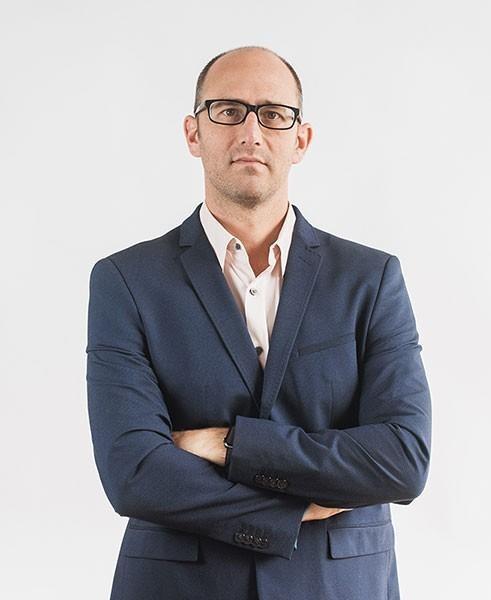
 Erik: Joining me now is Uranium Insider, founder and newsletter editor Justin Huhn. Justin, great to have you back on the show. I can't believe it's been a year since we've had you on, folks. Justin prepared a slide deck to accompany today's interview. You're definitely gonna wanna download this one. You'll find the link in your research roundup email. If you don't have a research roundup email, just go to our homepage, macrovoices.com. Click the red button above Justin's picture that says, looking for the downloads.
Justin. Wow. First of all, I want to give you credit just a few weeks ago, this correction that we saw in uranium stocks. I think you called the bottom of that exactly to the day in the newsletter.
And that was a great help to me and your other newsletter subscribers. I wanna move on though to another call that you've just made in the last few days. You guys are starting to trim some positions just because, boy, this, as much as I'm incredibly bullish, we've had such an incredible run the last few weeks.
I look at the Stochastics now that we're extreme oversold on both the daily and the weekly charts. Eh, now they're falling into overbought territory. So what do you think is are you guys trimming just because it's discipline and you've done
so well? Or is it maybe a turning point where we're about to get a swing trade lower?
Justin: It's definitely the former. First of all, happy to be back. Thank you so much for having me on. Always enjoy speaking with you. I know you guys have done a lot of work in this space so always enjoy these conversations. Yeah the space right now has had a stellar start to the year. In fact, the fast four weeks have basically been straight up for the uranium equities.
The ETFs are up 30 plus percent to start the year. It's pretty, been a pretty incredible move. We have as a trading portfolio that we established last year that did extremely well for us last year. In fact we established it in February of 2025, and it's up over a hundred percent since inception, and that involves swing trading, a basket of highly liquid stocks in the space.
So for us, this is more of a chart and interpretation as well as some influence from either the physical market and or sentiment. So sentiment is definitely heating up here. That's one sign. But the physical market is chugging along. We just had the UXC print today over $91 a pound up from the low eighties to start the year.
So it's been a solid move so far in physical, we think that move has plenty of legs. So as far as trimming positions, that primarily is the swing trading portfolio for the most part. We do have a bit of cash in both portfolios, but we're very net long here and expecting further moves. So not expecting a big trough, the broad market is not necessarily my forte, but if that, loses some momentum, we could definitely see some downside here for the equities.
But for now it's looking very strong. And Sprott here has a war chest. They're gonna end the day with over 200 million in cash and that's a lot of money to buy physical uranium. And luckily they're not the only players in the spot market right now, but we can dive deeper into that if you want.
Erik: Yeah, let's go a little deeper on that subject because SPUT, this sprott physical uranium trust. I think most investors don't understand how pivotal of a role it plays when SPUT is trading at a discount to NAV. It does not have the ability, somebody buying some more SPUT is not. Like buying uranium in the market and taking any supply, off the market.
But when SPUT trades at a premium to NAV like it is right now, every, share that somebody buys where this trust itself can issue a new share and raise cash, that's cash that you would think is immediately in the most immediate sense. In the moment that you buy that share.
You would think that's buying uranium on the spot market, but that's not really how it works. There's a lag effect there. SPUT built up a war chest, as you said. Why are they doing that and what happens and when will it happen that they start to put that money to work? Because for, for the longest time everybody was saying SPUT's not raising money.
That's the reason we're not really seeing the spot price moving. Now we are seeing the spot price, moving SPUT is raising money, but they're not putting the money to work. How come.
Justin: So they bought, the monthly average of the prior negotiated limitation of annual purchasing of 9 million pounds in January, already 750,000 pounds.
And in our estimation, they were doing this because they needed to do a couple of things before they could come back in and raise a lot more money or buy a lot more pounds, which is reestablish their ATM and renegotiate the, not only the shelf prospectus and file the shelf prospectus, which they did for 2 billion.
And their ATM now has a fresh 1 billion, but also renegotiate that annual limitation with the Ontario Securities Commission, which I believe they are in process of doing right now or if not in, in the coming weeks. Either way, they are back in the market doing some purchasing today, but leading up to filing that new prospectus.
Negotiating with the OSC, it seemed like they were treading lightly, so they weren't issuing as much as many units as they normally would when trading at a premium. And as mentioned, we've had a very equities risk on environment for the entire month so far, with the exception of a couple of days.
And so they just traded at an increasingly large premium to their net asset value. I think the highest closing nav that they had this month was pushing 9% premium. So yesterday, once we saw that their ATM had been re-up to a billion, we saw SPUT trade down pretty heavily, taking it all the way essentially back down to nav.
And what that was SPUT actually ising issuing units into the market. They raised almost 20 million yesterday. As far as we can tell, they've probably raised north of 50. I think they've raised somewhere between 60 and $70 million today alone on Tuesday the 27th as we record this. So the war chest is basically a factor of them not buying uranium because they were treading lightly prior to negotiating again with the osc.
So that is all coming to a close and they're gonna be back and it feels to me, Eric, there's a bit of a Wall Street awareness of some type of kind of uranium squeeze environment here. In fact, we're seeing multiple elements in the physical market that are resembling Q3 of 2023, which is essentially, we had a firmly established trend in the spot price and the sellers started to hold on a bit more tightly to their pounds.
And we started to see that, that dynamic over the past, let's say week or so. Wasn't there to end the year, not in the beginning of the month, but it's not just spud in there buying, we see traders in there as well. Other financials, hedge funds and banks are in there as well, and utilities also.
Some of the utilities are chasing the spot price here, and there's decent activity in the term market, so all signs are pointing to further tightness in the physical market and higher prices.
Erik: So just to recap all of that, the story of the last quarter of 2025 was basically, look the fundamentals are really terrific for the uranium market, but unfortunately the spot price just isn't moving for some reason.
And until it does, this thing can't really be unleashed. Then you get all of a sudden SPUT raising all this money. They've got the cash to buy a much more uranium, they're not allowed to do it because their agreement with the OSC limits the amount that they can buy. As a result, they're getting all of this cash built up, and despite the fact that they're not allowed to put that cash to work in the spot market, we're still up 30% on the year in January is not over yet.
So when they hopefully negotiate with the OSC and are allowed to invest the money that they're sitting on, the cash that they're sitting on it potentially is a big pushup on prices. Now, what I want to come to next, because I think it's really important for investors to think about is a lot of people have been saying, look.
If you look at the charts as much as the the uranium miners have done fabulously well, that seems to be a lot of speculation. The spot price of uranium wasn't really doing so well, and therefore, the smart money ought to not be buying any more uranium stocks. We ought to be buying SPUT and other proxies for direct investment.
In not uranium miners, but uranium itself because it's the commodity as opposed to the stocks that hasn't moved yet. So you really ought to be doing a sector rotation, if you will, out of the uranium miners into Spot and other proxies for uranium itself like YCA and the other tickers that are just uranium.
Now that's a pretty popular view. I don't agree with it. Justin, what I think is going on is the commodity market has to balance itself in real time. The stock market is forward looking. The stock market saw this coming. That's the reason you saw such a big appreciation in the miners, and I think the miners have been at a point where they can't get too far ahead of SPUT.
Is SPUT finally takes off. I think the miners are set to explode higher. Which of those views is right? 'cause there, it really affects where you're gonna put your money in this sector.
Justin: I think that the, an investment in SPUT or physical uranium, let's say here, a proxy for physical uranium is a very strong risk reward proposition.
The downside for the spot uranium market here is relatively minimal. Of course, you can have markets go risk off and SPUT can technically trade at a much larger discount to n as it has a few times in the past, pushing a 15, 16, 17% discount. I would argue the downside for spot here is, 15 to 20% maybe in a risk off environment.
But spot price is highly unlikely, at least right now, to be moving down at all, let alone, a five or $10 move down. Now we will see this move up eventually peak and eventually pull back probably to a higher low. The low of last year was in the low sixties. Then we had a floor move up into the seventies, and I would argue the floor now is probably in the mid to high eighties as we're trading 91 here.
So the confidence in SPUT moving higher is very high. And so your risk reward for spot is extremely attractive. Your downside might be 10, 15, 20% maximum, and the upside here could potentially be a hundred percent, maybe even more if things get really wild. So it's a very, it's a much safer investment.
It's very liquid. So for large institutions that don't want to take on individual mining, stock risk buying SPUT is a no-brainer. With that said, I agree with you. I think that Q4, Q3, late Q3 into Q4 of last year was the equities market for the Iranian mining stock. Looking over the valley and expecting the prices to eventually move and that was a pretty consensus type thought back then and still is.
We had the term market start to move up after 15 months of consolidation. We had the spot market slowly start to mo move up. Like I said, we saw the floors move from the sixties into the seventies. Over just a few short months, we were seeing evidence that utilities were starting to step back into the term market.
And in particular last summer, we saw large, very large utilities placing very small RFPs into the term market, seemingly dipping their toe in the water, testing the market to see where, what sort of responses they would get. And all of that tightening has, one obvious conclusion, which is a move up in price.
So are the equities technically overbought? If you're looking at unbiased view of the charts? Yeah, sure they are. But what is the backdrop? How do you value a company like NextGen, like Denison Mines these emerging producers. If you price in $120 uranium, instead of going back to their feasibility studies pricing in 50 or 60 uranium, it's a very different environment.
So I agree with you. I think the equities are looking over the valley expecting this price move that we're currently in. I would argue the early stages of. I would say yes, and I own both. I think it's a, if you're gonna buy uranium stocks, that's best to, diversify. I think that just the classic investment capital preservation tactics are, you shouldn't spare those.
If you're investing in uranium, definitely be diversified and don't go all in on one mining stock 'cause it's still mining and crazy stuff happens in mining. You can have permitting risk, you can have all sorts of things, accidents, Etc, Etc. So diversified basket of miners plus a reasonable holding in a Sprott, physically random trust or yellow cake, I think is really the way to go to allocate long hair.
Erik: Let's look at some of the charts in your slide deck, which is excellent. On the first page, you're talking about nuclear growth projections, and I think this is really important to get into because as much as you and I are both extremely bullish on this sector I think it's the trade of the decade, if if not longer than a decade.
But look, our job as professional investors is to take the contrarian side and say, how could we be getting this wrong? It seems to me like the growth projections for nuclear. We have to ask ourselves, okay, what could turn this trend around? Because as your chart on page one shows, it's just.
Crazy high projections in terms of what's likely to happen, especially if the Trump administration continues to get its way and is able to promote the nuclear Renaissance as much as Secretary Chris Wright has been seems to me like we do have a political risk here in the sense that President Trump fronts that are completely unrelated to energy is maybe starting to not have as much unified support in the Republican party for all of his policies.
Do we have a risk that maybe the Trump administration won't be able to pump this as hard as they have been, and we're going to have some of these projections come back down?
Justin: The good thing with Trump's proclamations in this particular case is that this is something that the industry actually wants.
So you're seeing utility interest in building new nuclear. You're obviously seeing the Trump admin highlight the absolute imperative to increase electricity generation capacity domestically. Not only just the growth of AI and data centers, Etc, but just the growth of electrification and demand for electricity.
Even X data centers is set to grow significantly. So they see the problem, they're trying to invest in it, they're trying to do what they can to support it. But you also have the tech companies and the tech companies have extremely deep pockets, arguably almost as deep as the government itself.
And they're investing directly in nuclear. And there's a further slide on this as well, a slide number three if you wanna jump to that. A tech company investment is huge. We're seeing meta Oracle, Amazon Microsoft, all invest billions and billions of dollars either with power purchase off takes from nuclear utilities that are currently operating or restarting island reactors like constellations deal with Microsoft to restart three Mile Island.
And we're actually seeing big tech companies make direct offtake deals like one Amazon made a deal with Rio Tinto for copper supply. And I highlight this question here, just throwing it out there, but it really is more of a tongue in cheek statement is, will big tech companies secure fuel for their nuclear investments?
I think that they will, I think that's an extreme right tail. Driver and potential catalyst for this investment for the price of uranium is to actually have a tech company make some sort of deal with a producer or an emerging producer to
secure pounds as an offtake for future production of uranium, an eventual fuel for these reactors that they're either funding to life extend or funding to build.
So how many reactors will we see the United States build in terms of new capacity is difficult to say. It's obvious. Been a, obviously been a challenge for many decades. Clearly there's support not only from the federal government, but from all the entities I already mentioned. So I think if it's going to happen, it's probably going to happen now and soon.
Will they be able to have 10 large AP 1000 reactors under construction by 2030? I think so, but it remains to be seen. And this graphic, of course, goes out all the way to 2050. That on page one here, and the big red bar is government targets. So anytime you're modeling that far out, you have to make a bunch of plugs and a bunch of assumptions.
But the, which, the World Nuclear Association, arguably, a pro-nuclear, but an unbiased analyst in terms of uranium demand, like they don't necessarily want to see more uranium demand or whatever you might say on that front, but they're taking all of the government targets and factoring those into this extremely bullish graphic.
But if you even go over to 2035, so a 10 year picture. There's barely any plugs for those government targets on that 10 year timeframe. And in our own models, Eric, just looking at what's currently operating, what is likely to be life extended or already officially approved for life extension and what's currently under construction and expected to hit the grid over that timeframe.
That's the demand We actually model out for out to 2035 with very few plugs besides China continuing on the pace they're currently at now. That's how we model it. That's what we see for demand. Obviously the WNA even going way out like this is a, this is more than a three X in global nuclear capacity by 2050, will we hit those targets?
It's hard to say, in my estimation, it doesn't actually matter for the length of time for this investment thesis, in my opinion, but. Clearly there's an enormous amount of momentum, not only in the United States, but on many other sovereigns that are looking to build nuclear here
Erik: On this theme of tech companies. I want to touch again, on another potentially bearish risk factor, and again I couldn't be more bullish on this sector, but if I think about what could go wrong, one of the things that could go wrong is Russia has a very large percentage of the enrichment capacity. So even if we can mine all the uranium that we need, and we can't, but the uranium bullish thesis is based on the idea of growing.
Demand not for raw uranium, although it can be raw, uranium can be used in just a few reactor types. Most of them require enriched uranium and we're very dependent on foreign sources, particularly Russia, for that enrichment capacity. It seems to me that if the tech boys could figure out how to help, let's say, improve the pace at which something like laser enrichment is being adopted.
By improving that technology, it could take a risk factor out of the market and it could accelerate demand dramatically. Because if I look at what the demand for the next 25 years for uranium is gonna be, it seems to me like, there's no question in my mind that there's gonna be more demand than we could possibly build mines for.
If we can figure out how to refine and enrich it, and it's that enrichment capacity that I'm not so sure about. What do you think in terms of maybe the tech players getting more involved in enrichment or investing directly in enrichment?
Justin: I think it's definitely possible. With that said, we're seeing a lot of investment at least domestically here, coming from the US federal government.
We just saw three $900 million awards to general matter centris and Orano which is ironically a French company that wants to build enrichment capacity here in the us. And a smaller award for global laser enrichment. It's certainly possible. I'm honestly expecting the tech companies to get more involved in direct investment in the fuel cycle now that they're putting billions and billions of dollars down to build out the actual new nuclear capacity for the data centers. So that has yet to really hit, we have heard kind of whispers over the past year that the tech companies have been poking around the fuel cycle and now seeing this direct offtake investment by Amazon with Rio Tinto for copper offtake.
I don't think it's a wild estimation to believe that this is going to continue to happen on the uranium front. But yeah, the enrichment capacity I think is an interesting one. We're definitely seeing some being built out in China. Russia still has the largest capacity. The French are building some, there's a bit more being built out in the United States.
Will it keep pace with the existing demand in the market? It seems to be, will it be sufficient for these lofty projections like that graphic on page one of the slide deck? No. So if we're going to meet those needs, we're gonna have to see much, much more capacity of both conversion and enrichment built out.
Assuming that this build out is largely light water, boiling water or advanced reactor designs and not heavy water, which so far it has been not a whole lot of heavy water being built besides in India. And those are smaller reactors, much smaller capacity. So a lot more of the fuel services fabrication, enrichment conversion is going to be needed to meet these targets.
Again, these targets are also based on a lot of the reactors that haven't started construction yet either. So we hypothetically need that capacity right now based on what's under construction. It does appear that we see growth of enrichment capacity relatively in line with the growth of nuclear capacity.
Erik: Ultimately what really matters the most is whether the buyers are buying and whether the sellers have enough to meet the amount they wanna buy. Let's move on to page four. Talk to me about what the history of this market has been and how it's evolving in terms of the attitude of fuel buyers.
Because it seems like for a while, the last couple of years, we just had this buyer strike where the buyers were convinced that increasing uranium prices were just a blip, that the prices were gonna go back down, and they seemed to be waiting it out. Is that changing finally?
Justin: It does seem to be changing.
It's very difficult for the investor mindset to, to fully comprehend how utility fuel buyers generally operate and think about this market. You have fuel buyers that in many cases have been working in this industry, sometimes for the same utility, for multiple decades. And the history of this market is very different from the present reality of this market.
So if you go back, go back into the nineties and the two thousands following a huge price spike in the seventies where you had a, just a gigantic nuclear build out. You had 40 or 50 reactor construction starts per year in the mid seventies. It was a huge build out and in a massive mine supply.
But you had utilities clamoring for uranium, you had the US buying uranium, you had the Russian buying uranium. It was crazy. Just an absolute huge price spike in the seventies with the oil crisis. Then you had the price crash because
we had so much secondary supply. So starting in 1993, we had a, the Megatons of Megawatts program with 20 million pounds of Russian down blended high, enrich uranium into fabricated fuel that was sent over to the United States fleet, 20 million pounds a year for 20 years.
So the history of this market is big fluctuations in price, but most of the time, with the exception of a few spikes, one in the seventies, one from oh four to oh seven, and one theoretically potentially happening now, although I wouldn't argue that this is a temporary spike being driven by either some, exogenous event or financialization.
I think the financialization is influencing things here, but I just think SPUT is buying the marginal pound. We're seeing a hundred thousand pounds, 200,000 pounds move price. It shouldn't be happening if it wasn't such a tight market, but the fuel buyer is looking back and saying, okay, forever there's been all of the uranium I need at a relatively reasonable price.
With very few exceptions. And their view of 2004 to 2007 was a massive commodities run. The Chinese did a decent amount of buying for a couple of years there we had some mine floods and we had Uranium Participation Corporation, which became SPUT in 2021, buying uranium along with some hedge funds.
It was a temporary spike, came right back down after the GFC, but it started to grind higher again because the fundamental drivers were there. So that was a contracting cycle going back, and you can see in the graphic page four, that we
had greater than replacement rates. So replacement rate essentially is how much uranium is being burned up in the nuclear fleet on globally on an annual basis.
So going back to 2005, we had 250 million pounds contracted, but we probably had about 170 million pounds burned up in the reactor fleet. So greater than replacement rate contracting, big volumes. And that really led to that big move in price. Following that, following Fukushima, Japan shut off all the reactors.
Germany started shutting them off. A few other countries had phase out plans like Belgium and Taiwan. And you had an abundant amount of uranium that was just hundreds of millions of pounds of oversupply. Liquid mobile inventory globally. The price crashed and utilities did not need to contract.
So this is long-term contracting. This is a, these bars here are utilities calling up Cameco, Kazatomprom, Uranium One, Orano and saying, I want a contract for a few million pounds a year, delivered out for a five year period, whatever it might be. They didn't need to do that because there was so much uranium floating around the spot market.
They engaged in in hundreds and hundreds of carry trades and not thousands where utilities engage with a trader and say, I want a couple million pounds delivered, let's say 2, 3, 4 years out. They're usually more midterm, usually slightly smaller volume, and the trader goes and buys that material in the spot market.
The carry trade went a long way to cleaning up that mobile inventory. Those mobile inventories are largely gone. In fact, UXC, which is the primary nuclear fuel consultant in the space. Has essentially was warning, let's see, this was August of 23, so two and a half years ago, they were warning that the age of inventory overhang is over.
The buffer is largely gone. So fuel buyers here are starting to see that liquidity in the market has largely dried up. You can still buy in small volumes in the spot market or the carry trade if the math is right, based on the forward curve. But their options are running out in terms of what else can they do besides stepping up and signing large long-term contracts with the primary producers, which is what they're starting to do.
So we saw 71 million pounds added to the long-term tally in Q4 of 2025 alone. A lot of tenders came into the market. A couple of large contracts were signed. And so how much can be bought in the spot market and carry trade? That
number is diminishing. Secondary supplies are diminishing. Inventories are diminishing.
They can only flex up on contracts so much. So the flex provisions that were in these contracts that signed back in late 20 teens, early two thousands that are still being delivered on now, those flex provisions were for contracts that were majority, if not entirely base escalated or fixed price contracts.
So if you signed a contract in 2020 for 80% fixed price and 20% market referenced at the time of delivery, and that fixed price was $40 a pound, and you're taking delivery now, you flex up, whatever's allowed in the contract, 20%, 30% flex provision, sometimes volume. Now that we're shifting to mostly, if not entirely market reference contracts, those flex provisions start to look less attractive because you end up paying the same amount as the market reference delivery for the added pounds.
So not only are there fewer flex provisions in the contracts signed last year or the year before this year and moving forward, but the types of contracts have shifted. So all of the signs are there that we're shifting from a buyer's market to a seller's market. And this is a really difficult position for a fuel buyer right now.
I'll give you one example just to finish off this thought. These fuel buyers and these utilities are signing other fuel buyers. The utilities are signing power purchase agreement off takes with electricity consumers. And oftentimes these are long-term agreements, 10 year agreements that basically fixed prices with, inflation adjustments so they know what they're going to be earning on the electricity side of things, right?
With these agreements. Then they go and they call up Cameco, whoever it might be, and say, I need to buy uranium to, to feed into this, right? So Cameco says, okay, we're here at $91 spot. We'll sign a contract at $85 floor, 150, $160 ceilings reference to the market at the time of delivery. We're talking 50, 60, $70 spread between the floors and the ceilings.
It's very difficult for utility to know what they're going to be bringing in on the revenue side of things to not know what they're going to be paying on the fuel side of things. Really what it comes down to is they don't really have a choice and they're going to have to pay that. And they're starting to come to, let's say, an acceptance.
They've moved past the denial stage. Now they're moving into that acceptance stage and signing these larger, higher price contracts that are largely referenced to the market at the time of delivery. And why are they referenced to the market at the time of delivery? Because producers want exposure to higher pricing environment, which they're all very confidently betting on.
And that really should tell you more than my pontifications, more than anyone else who's analyzing this market. What are the sellers asking for and what are they getting in their contracts? If you want stability in an uncertain market, you're going to sign fixed price contracts.
If you want exposure to what you are highly confident, it's going to pan out. You want reference to the market with ceilings that are sometimes close to a hundred percent higher than where we are here. So that's what we're looking at. Utilities are slowly coming around. Fuel buyers, from what I'm hearing that have been multiple fuel buyers for large utilities that have been largely reliant on the spot market and carry trade for literally decades are shifting their strategy and focusing on security of supply rather than pulling every lever they possibly can to get a little bit here, a little bit there, as cheap as they can.
That strategy is shifting and that's important as we go forward for term market volumes. Term market pricing, ultimately spot pricing.
Erik: I would think that the seller's confidence has also got to be increasing with just the mechanics of what we're seeing in SPUT right now. Because if you're Cameco and you're asking for those really high, a floor that's just barely below the market, a ceiling that's way above the market.
And the guy on the other side of the table is saying, don't pull this crap on us or else we're gonna pull a buyer strike. You can just say, no, you're not SPUT is just awaiting regulatory approval to unleash a huge amount of cash that they're sitting on,
which will easily support the spot market as long as we need to. You guys are not in a position to negotiate anything shut up and sign. It seems like all of the sudden Cameco and the other big uranium suppliers can engage in I'll go out in a limb here and say, Trump style negotiating tactics of you don't have a choice.
You're gonna do what we tell you to do.
Justin: Sure, yeah. The confidence in where this market is headed is very high amongst producers. And I think that the financialization of the sector is
certainly supporting what the producers are wanting. To your point and like I said, SPUT being able to buy a hundred thousand pounds here, 200,000 thousands pounds there in a highly liquid market, that shouldn't really matter, but it's that marginal pound is moving the price here.
And that, that alone is as evidence of how tight the market is. And, there's always some production coming into the spot market. It's not the static bucket that once it's gone. It's just a settlement. It's a, it's a surplus settlement market. But for the producers seeing the SPUT activity.
Seeing the pressure on the spot market is certainly something that, that supports them wanting market referenced contracts that they're signing with utilities here. And like I said, seeing how high these ceilings are going, that actually is literally telling you where they expect the price to go and who's done more work on the sector than the actual producers, especially the big producers that are having to sign these binding contracts for delivery 3, 4, 5, 6, 7, sometimes 10 years out.
This is very important to their shareholders, very important to their bottom line. And they're seeing shareholder pressure that, that wants them to capture more of the upside in the future. And you see some of these brownfield restart companies that sign base escalated contracts at 80 bucks a pound, were coming under fire from their shareholders.
Stop giving this away. We know the price is going higher. Hold out and capture that. And shareholder value is something that I think the utility fuel buyers don't really give enough attention to. These companies don't exist to break even. And they all went through hell from, 2008 all the way till, just recently.
So these companies went through ab absolute hell, shareholders had been diluted to oblivion in the 20 teens. Finally, the market is returning to bring some value to the actual producers and they're going to be beholden to their shareholders. And the shareholders want exposure to these rising prices.
And that's something that utilities definitely have to understand going forward.
Erik: Something he said earlier, Justin, was that the alignment of the industry with government policy meant that, you're not getting a lot of pushback. One place, I think there might be some pushback if we move on to page five, is the talk of a strategic uranium reserve.
Intuitively you'd think the industry would be all for that. From what I hear, the utilities don't want there to be a strategic uranium reserve. What's that about?
Justin: It's just about the government being, potentially a price insensitive buyer and adding pressure to an already tight market.
The utilities are fully aware of the financialization of the sector and that you have, very aggressive financial entities. And SPUT is just a vehicle. It's really the investors that are coming into that and providing it with the capital to raise cash. But you also have hedge funds and banks and plenty of trader commodities traders that are all positioning net long.
So the utilities are aware of all of this and they don't see a strategic uranium reserve being in their best interest. Despite the fact that the spirit of the reserve potentially would be to hold, a bunch of uranium for harder times in the future when perhaps that uranium could be sold or distributed to those utilities.
That's really the spirit of the potential reserve and the existence of the reserve as it is now with this tiny amount of buying needed a few years back. Our understanding is that the buying that the SUR did, let's see, I think this was 2022 when they did buy from a couple of US producers that uranium is now in possession of the DOD.
That's my understanding. So we believe that the Department of Defense actually is on the lower side in terms of their inventory, and that's not just for weaponry. That's of course with the nuclear navy and nuclear aircraft carriers. They're building multiples of these very large multi-billion dollar ships currently.
Take a lot of uranium, actually it's very highly enriched uranium that goes into these subs and these aircraft carriers, and they're fueled once and we're talking many millions of pounds for a single fueling for one of these ships. So we, we think that there's pressure coming from that, but yes, of course the utilities have
a strong lobby and I guarantee you they're doing what they can to put pressure against this establishment.
So we're not necessarily betting on it. We're just going off of what we're hearing for the administration. They did establish, or there's a proposal currently. In Congress for a two and a half billion dollars stockpile of critical minerals of which uranium is one. And we hear Christopher Wright mention multiple times that they're considering a strategic uranium reserve.
So maybe it happens, maybe it doesn't. It obviously would be intelligent for the security of the nuclear fleet of the United States to do that because the US utilities typically only hold about two years of inventory. So whether it happens or not really, not sure, but you're absolutely right, utilities don't want it to happen and are doing what they can to pressure pressure, interest in the US government to, to keep that from happening.
Erik: So the government wants to underwrite free of charge and insurance policy to protect the nuclear utility industry from hard times by providing a safe haven resource of available uranium so that those utilities don't have to absorb the cost of holding those long-term reserves themselves. And the utilities are objecting to that because it potentially interferes with what the prices are in the next three months.
Sounds brilliant to me.
Justin: Yeah
Erik: just genius. It's and about and not at all out of character, from what I've heard from Mike Alkin about these nuclear fuel buyers. It sounds like exactly their mentality.
Justin: Yeah, it's and I think the spirit of the reserve really is more of an acknowledgement of the reliance that 20% of our grid is on foreign entities.
We're mining a couple million pounds of uranium and consuming 50 highly reliant on Russia for conversion and enrichment. Highly reliant on Kazakhstan for uranium, and then secondarily Canada. So it's more of a just wanting to establish that to support the uranium miners in the United States than it's necessarily a basket of uranium for utilities.
But to your point. Utilities. Again, looking at that W&A graphic on page one, looking at the analysis that we do, that Goldman Sachs has been doing, that a number of other entities in the space have been doing, showing a clear and obvious very large growth in demand and struggling supply response.
On the uranium side of things the utilities and the fuel buyers don't really pay attention to that. And now that's speaking generally they, there are a few fuel buyers in the United States that I know of personally that are very ahead of the curve. Their utilities are very well covered. They've done their own supply and demand modeling, for example.
So they get it and they're well covered and they know and believe that prices are coming. Higher prices are incoming for most of the rest of the utilities. They buy what they need to buy when they need to buy it, and they have to get approval to do so from their upper management that has a budgeting committee and their bottom line matters.
If the US strategic uranium reserve announcement causes a $5 jump in spot, and then the actual buying causes another few dollars. Jump in spot. That's tens of millions of dollars to their bottom line that they're looking out for not only on deliveries, but for their future purchases as well.
So I understand why they're pressuring, but at the same time, it doesn't really feel like it's in line with kind of the spirit of what's happening here.
Erik: Justin, you mentioned some of the international aspects of this. Let's talk about the other side of slide number five here, where you talk about a huge amount of demand from China and India for uranium.
They're engaging with Canada for uranium supply. As soon as I saw that, I thought, well, wait a minute. Last time anybody tried to sell anything to China or India, president Trump intervened and said, no, you're not allowed to do that, or, I'm gonna hit you with tariffs.
Is there a risk that the US government in for the sake of America first policies, tries to veto or nix those deals and say, Canada, don't sell your uranium to India or China. It is only sell it to us. Does that potentially affect the market?
Justin: It's hard to say really. It's hard to really predict exactly what Trump will end up doing on this front.
Obviously he wasn't happy to see that Kearney was meeting with Xi and trying to establish a critical minerals, deal selling, selling uranium and a number of other elements to China. I think that he's trying to influence that deal, not necessarily to make more uranium and other things available to the United States, but also just to throw his weight around and influence these decisions.
And I think that there's, a lot of this stuff with Trump and in my personal opinion, there's just so much more that's going on behind the scenes that, that any of us have any idea of. So what's really behind this, I have no idea, but we do know that China is scouring the globe for critical minerals, uranium included.
China. China as a sovereign, has the largest inventory of uranium by a long shot. Their numbers are huge, like north of 600 million pounds of uranium. But importantly, that's total strategic commercial inventory. It's not just utility inventory. That also includes military inventory. So how much of that is actually allocated for the, for their new civilian nuclear program is harder to say, but they also have the more, most aggressive builds, and that uranium is never leaving the country.
This is strategic. Once it's on their shores, it doesn't leave. The only exception is that is sometimes they buy and then resell. So for example, they been buying Russian enrichment and reselling it into Europe and the United States. Those volumes are small, but they engage in that type of trading. With all of that said.
Simply seeing both the Chinese and the Indians. And most importantly to this point is that they're both sovereigns, right? The Chinese utilities state owned, the Indian nuclear operators are state owned. They are looking at Canada for supply, and Canada has been the most reliable supplier to the west by far because Kazatomprom has been perfectly reliable, but they've had trouble with their shipping routes when the West is trying to avoid shipments out of Russia.
And they've had much more business engagement with both the Chinese and the Russians. So Canada is really our best source of uranium in the western world. And to see two Eastern sovereigns start to negotiate with Canada and potentially with Cameco directly especially on the fa on the side of India, should be and is somewhat of a wake up call to multiple Western utilities that the sovereigns are stepping up because you have these private or publicly owned utilities that are.
That are hemming and hawing about large procurements and mu much more price sensitive. And then you have the eastern sovereigns just stepping up and I'm your huckleberry and let's get it done. So this is something that I think is going to be a trend going forward is, we're seeing that general trend anyways, just globally right now.
We're going much very quickly away from a multipolar world to more of a nationalization type of world. And I think that a lot of countries are starting to look out for number one in a way that we haven't seen in a number of decades forth turning type stuff. So will we see more sovereigns engage in, america first type policies for themselves. We've heard the EU talking about having a strategic nuclear fuel stockpile. I think more of this is coming. And importantly, Eric, this is all right tail. These strategic stockpiles, this secondary demand is not something that is very modeled out.
So in our own models, that secondary demand, we have a plug number of 10 million pounds a year. Last year we saw the financials do almost double that alone. That's not talking utility inventory restocking. That's not talking sovereign stockpiling, that's just the financials. So that secondary demand is a very potentially large number.
I think more of this is coming in the near future.
Erik: Now we've been talking about western supply. Let's also cover the Eastern Hemisphere supply. Russia has, as we discussed, most of the enrichment capacity, but they don't produce a whole lot of uranium in Russia. It's Kazakhstan. That's the big producer in that part of the world.
Tell us what's going on here on page six.
Justin: Yeah, this, I think, is a really interesting element of this market that is, is emerging. And, the table on the left hand side came from some analysis that came out from Ocean Hall. So I wanna plug those guys. They did some good work on this front.
So Kazakhstan is by far the world's largest producer. They produce about 40% of the uranium supply on an annual basis right now. And what happens in Kazakhstan affects this entire market. Now, the graphic on the upper right of slide number six shows their existing production profile. They expect their production to peak in the next, two or three or four years.
And that is based on a very large project, the Budenovskoye project, which is a joint venture with Russia. So Russia, like you mentioned, has the largest capacity for both conversion and enrichment and conversion is the process of turning U308 or mined uranium into a gas uranium, hexa fluoride so that it can be enriched in a gas centrifuge?
Despite the fact that Russia has the most capacity for conversion, they net buyers of UF6, the product of conversion. That's how much demand they have for their enrichment services globally and how short they are on the uranium front. So they need uranium and they need it now, and they need it badly.
So they're putting a lot of pressure on Kazakhstan to develop this large JV. If you look at the production volume ladder with these new mineral extraction tax hikes, you know that Budenovskoye project, it's max capacity, a hundred percent of subsoil use is 6,000 tons a year.
So assuming they reach that, which is possible we model out that they do, but it's no guarantee that they do, they'll have an 18% tax on that. And look at the uranium price, we're already above $90 a pound. They could potentially be paying a 20.5% tax on the uranium coming out of the country. And this of course, is a move on behalf of Kazakhstan, which is the state is 75% owner of Kazatomprom and 25% publicly floated on the London Stock Exchange.
The state is trying to do what they can to establish this taxation and ownership of the joint ventures as well to maximize what they will be earning and benefiting out of these limited deposits in the country. Yes, they're very large. They'll be able to produce for decades going out into the future, but they want to capture this lightning in a bottle.
So what this means is that the Budenovskoye project in the second largest is the Katco JV with the French, who are also very short uranium, and that can produce potentially up to 4,000 tons. So the two largest projects are gonna be hit with the largest levels of taxation coming outta Kazakhstan by the two entities that most need uranium globally.
The French and the Russians. They need it, and they need it very badly. They're both very short with pipeline problems for the uranium projects. I don't see this increase in the MET. In lowering production out of those projects, I see it affecting price, so they're going to wanna do what they can to ramp those projects, which means prices have to go higher based on that.
This is all to say that Kazakhstan is limited and you can see their own production profile going out into the future. Yes. They don't have years on this X axis, but this is about a 2050 graphic. So after peaking, you can see it declines very rapidly. Some of their existing legacy projects are already in decline, many more hit de sharp decline rates in the next 5, 6, 7 years.
So they need to invest a lot of money in establishing new deposits, which of course are less attractive than the deposits they first started to develop back in the two thousands, 2000 teens. And this all plays into, the, just the looking at this price graphic at the lower right of this slide is, this is inflation adjusted.
And so if you look back at the inflation adjusted spike, even the term price went to 150 inflation adjusted back in 2007. And now we are at $88 term with a much, much more favorable environment. And all of the elements I've been discussing today, including these high mineral extraction taxes and the increasing moves that the country is making to to increase their ownership of their joint venture projects when they renegotiate the license for the joint
ventures so that some of these projects, all these JVs that are existing now have to be negotiate renegotiated over the course of the next 10 years when they are.
Ownership goes from many cases, 50 50, 49, 51 goes to 90 10 Kazakhstan, and the new developments for the JVs is automatically 75 25. So Kazakhstan is starting to take much more seriously the ownership of their mineral wealth, and that is only going to have a creative pressure on the price.
Erik: Let's jump ahead to page eight where you talk about secondary commercial inventories.
First, let's define that term, what we're talking about, but then explain what this trend is about, where it seems like everybody had plenty of inventory and all of a sudden they don't. Why don't they?
Justin: A lot of that inventory drawdown has simply come from the lack of procurement in the long-term market and the lack of supply response.
Erik: Let's just start with a definition of what we mean by secondary commercial inventory. Who's holding what inventory of what, where?
Justin: Sure. So this is a little bit tricky because this data and this graphic comes from UXC and UXC counts inventory drawdown as secondary supply. They've come under a little bit of criticism for doing that over the years because they're technically double counting, right?
That those pounds come out of the ground and year X and that's counted as supply and then when they're draw down, that's counted as secondary supply. The reason they do that is because we're not seeing reactors actually not be able to operate because there is no fuel. So anytime you see the purchasing volumes on any given year, less than the burnout rate, that gap is quote unquote inventory drawdown and or secondary supplies.
So in this case, you see that giant orange bar in 2021 as inventory drawdown or secondary supply that was largely influenced by SPUT buying, right? We had, what did they buy? 20 something million pounds in 2021. So they were buying
excess inventories that were in the market. And so these commercial inventories is basically just any inventory that's held by any commercial entity.
And so in 2021, a lot of that came from traders who were holding pounds in carry, meant to deliver to utilities. The following year, two years, three years down the road, the spot started buying the spot price spike. These traders sold
those held pounds to spot and then went back into the midterm market to procure from a producer.
So that was this reverse carry trade. And the reason why that inventory that inventory number and that secondary supply number is so big for 2021, but secondary supplies, they're always a part of this market. And so you can put
those in two different buckets. One is actual mobile inventories that are held by somebody commercially somewhere, and the other is actual supply coming into the market.
That's new secondary supply. Now that would primarily come from enrichment underfeeding or tails reen enrichment. And without getting super geeky with this is a number that was pushing 25 to 30 million pounds annually just five years ago. This is probably closer to 10 million pounds a year right now.
And this is basically when there's excess enrichment capacity. What Enrichers will do is they'll actually spin those centrifuges down to a lower tails assay than what was. Dictated in a contract that the utility has to provide to them the feed stock for that enrichment contract. So they spin to a lower tails, they have a little bit of extra feed and they under feed the centrifuge and sell that excess feed stock into the market as UF six.
That is underfeeding tails. Reen enrichment is actually when there's really a trough in enrichment demand, they can actually take tails material and spin it back up to natural UF six and sell that into the market as well. So that is, that has literally been cut by two thirds over the past five years.
The other bucket is just these buffer inventories. Utilities hold them. In some cases sovereigns hold them, and this is just material that's been sitting around from decade of overproduction in the 20 teens. Now that material is largely gone. But utilities will always hold some inventory. And the reason they do that is because the fuel cycle takes so long for uranium to go from mine out of the ground into fabricated fuel takes at least 18 months and most commonly 24 to sometimes even 30 months.
So because it takes so long, utilities will always hold inventory and they usually hold it across the fuel cycle. So every utility will at least have one extra core load of fabricated fuel onsite at all times. But they'll also hold some uranium, some UF six at the conversion facilities. They'll hold some enriched uranium.
And then, like I said, the fab fuel. So utility inventories are kind of always there and what you're seeing when this UXC is projecting this out into the future is
that buffer inventory is gone. So all we really have is a small amount of utility inventory that can buffer some, some temporary swings in price or some temporary issues around supply, whatever it might be.
But it's not this enormous amount of material that's overhanging the market. And as you see these big numbers, 21, 22, like I mentioned, August 23, the age of inventory overhang is over. They can see that, and that's why they're projecting this out into the future. They're just no longer is that buffer and the conditions are absolutely there for this market to be disrupted.
I say this all the time, Eric, you don't really have to even know exactly what is going to be the disruptor. Just that the conditions are there for something to disrupt this market. And I'm not necessarily betting on disruption, but it's so obvious to me that something will disrupt this market. We don't know where the eventual supply is going to come from.
The balance, the market and the inventory side of things. The secondary supply side of things are so tight that. A shock to supply, whatever it might be. Whether that's the announcement of a stockpile from some sovereign, whether it's one of these large development projects like NextGen's Arrow, the entire nuclear industry is expecting this to be producing 29 million pounds a year, starting in 2031.
That isn't happening. They don't know it yet, but that's not happening. Will it be producing eventually? Absolutely. How much and how soon is harder to say. But even by their own timelines, we see 2032 as first production and that would be ramp up. And the company is already taking advantage of the power of the narrative here and the power of the story of this deposit because it's so fundamental to the supply.
Even approaching anything balanced in the 2030s, which it will maybe barely do if it comes online on time and on budget, but they're already saying, Hey, we will be producing according to the market signals. Such a low cost high grade project, they can cycle that production up and down as they see fit and essentially control that narrative and they're starting to express that to the market.
So it's just very fragile. Something's gonna disrupt it. You don't have to know what that something is, just that the conditions are there for it to happen.
Erik: Okay, so to summarize all of that, because I wanna make sure I'm interpreting this right. If I went back 10 years and I said, oh my gosh, this
uranium trade's gonna be great because boy, look at the balance of supply and demand.
If just one mine went offline, they could unbalance the market and the price could skyrocket. People in the know would've said sorry, it doesn't work that way. There's plenty of inventory hanging around. If the price goes up to the point that incentivizes those people to sell it, they'll sell it.
There's plenty of buffer to absorb something going wrong. That was how it worked until last year that it stopped working that way. Now it really is back to if just one mine went offline, we'd be screwed and it would rocket the price much higher. Is that right?
Justin: Absolutely. Yeah. I don't know if I would necessarily agree with the statement that we'd be screwed.
I do think that there's sufficient inventories out there to buffer something like that. But the price response would be massive. And, this could really happen at any time. I think the most likely disruption is these very important larger development projects not panning out exactly as the industry expects.
And the industry is basically looking at what the investors are looking at, right? They're looking at the feasibility studies. They're looking at what the company is telling investors that what they'll be producing and when, and of course, that historically speaking, especially in the uranium world just never happens.
These mines are never built on time. They just aren't. And that disruption is highly likely to pan out, but are there inventories? Yes, of course. The problem is those inventories largely are not for sale. So what are there, I remember there's a very popular uranium investor out there.
I'm not gonna mention him by name, but he basically was bearish at this moment in time over the past couple of years, basically saying there's, there's 1.3 billion pounds of commercial inventories. It's yeah, okay. Half of that's in China. The rest of it is distributed around the global nuclear utilities.
So US utilities of two years of inventory, EU utilities of three years of inventory. They don't draw those down besides maybe a five or 10% draw down here or there to try to buffer what they might feel is a temporary price spike. And that's it. They're not gonna draw them down to zero. Yes. If we go to a hundred dollars, $115, $130, $150, will we see supply shake out here and there?
Absolutely. We will see some inventory be sold in the market. We'll see some profit taking. There's a decent amount of positioning here on behalf of hedge funds. They're not holding those pounds into perpetuity. They will sell them eventually. So there's always a little bit, a tiny bit of flex, but the big buffers are gone.
There's no megatons of megawatts. Underfeeding is almost entirely gone. In fact we would expect that we'll potentially see some overfeeding in the coming years, which has the opposite effect, extra demand for that enrichment process. And then of course, commercial inventories are on the low end, historically speaking as well, because Adam proms at a 10 year low in their own inventories.
So just the general buffer is very small here.
Erik: Justin, final question. We cannot responsibly both be as bullish as we are without asking the critical question of, okay, what could happen to turn this all around? There has to be something, obviously, I guess the big one would be a worse than Fukushima sized nuclear accident that completely changes public sentiment globally around nuclear energy.
And that could happen if somebody blew one of these things up as an act of terrorism. In the world we live in it it's not at all impossible. Aside from that, what else can go wrong that could derail the extremely bullish hypothesis that both you and I share?
Justin: Yeah, the nuclear accident potential.
It's always there. I, in my opinion, the industry is. Has much, much better safety checks in place following the Fukushima Daiichi disaster. So that was something that happened, had no fatalities, but it did affect the industry. It caused Japan to shut off all the reactors and a number of other countries do the same.
So it had demand destruction effectively, 10 and eventually about 15% of global demand that was there in 2010 was gone by 2015. So demand destruction of some form or another is probably the biggest potential to turn this investment around because we don't see, at least in the near term, let's say the next five years, where supply is going to change the investment thesis.
Eventually are we above 150, $200 and it stays there for a while and all of a sudden we see, phosphate projects producing uranium and all of these marginal
producers eventually get in production. Yeah, it will be a, a natural commodity cycle. This will have a peak someday. We don't see that happening in the near to the midterm.
So the only thing that we could see that would change this thesis for us, would be some kind of demand destruction. It wouldn't necessarily be because of a nuclear accident, because that doesn't necessarily mean demand destruction depending on how the accident actually would pan out.
Certainly it'd be terrible for sentiment, at least in the near term, and probably really bad for the equities in the near term. But would we see. 50, 60, 70, 80 reactors shut off because of that. I don't really know, and I don't really think so. With that said something else, like if China all of a sudden says, okay, we're done building nuclear, we've reached our goals, if that narrative is going to hurt and if they change their actual demand projections and their growth projections for nuclear, that affects the bottom line in terms of the supply and demand calculation.
So a change in demand projections for whatever reason, is really the only thing I can see that's going to derail this in the near to the midterm. But like I said, eventually this will be a commodities trade where high enough prices for long enough incentivizes enough supply that will eventually cap that price move and eventually will turn the price down.
How soon that happens, I can say very confidently. I don't see how that happens in any way, shape or form. Assuming the demand stays as what we're projecting, which I believe that it will in the next 5, 6, 7, 8 years, I really don't see that happening. So even if we were at $150 uranium next week, it's still gonna be years and years and years down the road for these marginal projects that could be profitable at that price to actually be producing into the market.
So I think we have a strong runway here, Eric. I know that you agree with me there, but hard to say what would cause that demand destruction, but that's the only thing that we would be looking for to actually change this trajectory.
Erik: Justin, I can't thank you enough for another terrific interview.
Before we close, tell us about what you do at Uranium Insider. You publish a terrific newsletter. I quite enjoy receiving it. You got videos and all kinds of stuff. What's involved? How much does it cost and how do people sign up?
Justin: Yeah, thanks Eric. Appreciate the support on that front. So yeah, we basically cover this sector in and out on a daily basis.
We've got a small team behind us. We've been doing this since 2019. We put a lot of focus into the physical market. This, in our estimation, is the most important thing to fully understand if you're going to be invested in the sector. So we have multiple price reporters, multiple services, multiple connections in the industry, fuel buyers, traders, and we're communicating with these folks on a daily basis.
We wanna know what's happening out there in the physical market. The equities markets will definitely fluctuate. Sometimes they get way overbought relative to physical. Sometimes they get way oversold relative to physical, but generally speaking, they move. At least directionally with the price of uranium.
So that's the most important thing that we follow, and we track that and we report on that to our membership on a daily basis. We have a very in-depth monthly newsletter. We do weekly update videos for our membership. We do a daily data sheet that follows the ETF and spot flows, as well as the most important pieces of news on the physical market on a daily basis.
We do a weekly watch list that does a technical analysis of the stocks that we cover. And I do a physical uranium market report once a week. That dives much more deeply into what's happening in the spot, the term markets. And in my estimation, if you have a decent amount of money along this sector you have to have this information.
It's an absolute must to stay on top of what's happening here. And like we mentioned at the top of the interview, we have something called the dynamic model portfolio, which is a trading portfolio, which as I mentioned, we established last February, 2025. And that portfolio is up over a hundred percent.
So that aims to track physical sentiment and charting to give us trade signals buying and selling to trade this sector because even though we are directionally very bullish for even the long term, we do have very strong swings to the upside and the downside. It's a very tradable market.
So that's been a huge success for us. The newsletter is 7 99 a year, which I think is a pittance compared to what this sector offers in terms of upside potential, if you have even a small amount of money invested here.
Erik: Patrick Ceresna and I will be back as Macro Voices continues right here at macrovoices.com.
